

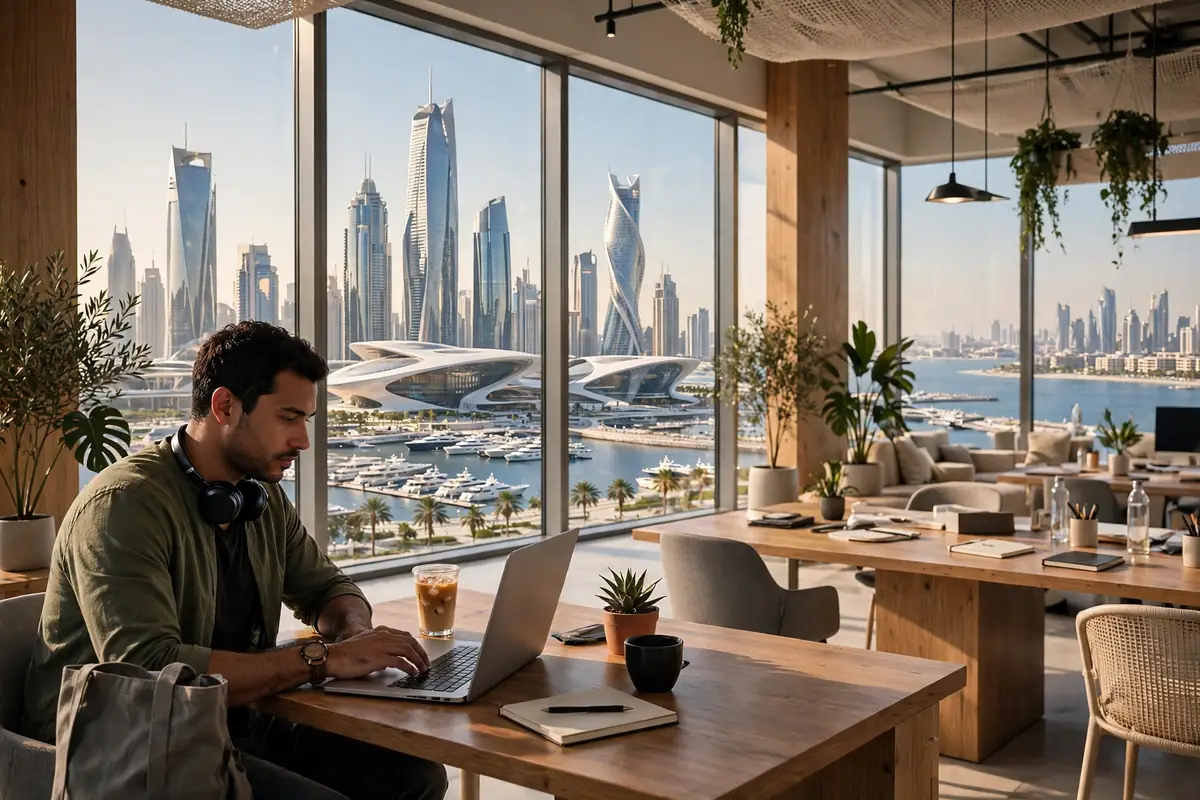
Remote work has changed how people think about living in the Gulf. A few years ago, most expats in the GCC arrived on a company-sponsored visa with a desk waiting for them. Today, a growing number of professionals are bringing their laptops with them instead — freelancers, consultants, founders and remote employees who want Gulf sunshine, tax efficiency and world-class infrastructure while working for clients anywhere in the world. Every GCC country now competes for this talent, but the cities differ a lot in cost, lifestyle and visa options. Here is how the main contenders compare.
Why the Gulf Works So Well for Remote Workers
The basics are hard to beat. Internet speeds in the UAE, Qatar and Bahrain rank among the fastest globally, coworking spaces are everywhere, and most GCC states levy no personal income tax on individuals. Add year-round sunshine, excellent flight connections to Europe and Asia, and time zones that overlap with both London and Mumbai, and the region becomes a practical base rather than just a holiday stop. If you are still weighing up the wider move, our guide to the cost of living in the Gulf breaks down what everyday life actually costs in each country.
Dubai, UAE — The Default Choice
Dubai remains the region’s remote-work capital. The one-year Virtual Working Programme visa lets employed remote workers live in the emirate while working for an overseas company, subject to a minimum monthly income requirement, and the city’s coworking scene — from business-district hubs to beachside cafés in JLT and Alserkal Avenue — is unmatched. Internet is fast and reliable, and the social scene for nomads is the largest in the Gulf. The trade-off is cost: rents and daily spending sit at the top of the GCC range, so Dubai suits higher earners who value convenience over savings.
Abu Dhabi, UAE — Calmer, Greener, Slightly Cheaper
An hour down the road, Abu Dhabi offers a quieter version of the same infrastructure. The Remote Working Visa mirrors Dubai’s scheme, rents are generally lower, and the Corniche, Saadiyat’s beaches and a strong cultural calendar give the city a more settled feel. It is a good pick for remote workers who want the UAE’s connectivity without Dubai’s pace — and it is increasingly popular with families combining remote work with good schools.
Doha, Qatar — Compact and Surprisingly Affordable
Doha has quietly become a strong option since the World Cup upgraded its infrastructure. The city is compact, the metro makes car-free living realistic, and districts like Msheireb and West Bay offer modern apartments, cafés with fast Wi-Fi and a growing coworking scene. Qatar does not yet run a headline digital-nomad visa, so most remote workers arrive on other residency routes or visit visas while working for foreign clients — check the current rules carefully before booking a one-way ticket. Living costs typically sit below Dubai, and the café culture around Souq Waqif and The Pearl is genuinely pleasant in the cooler months.
Manama, Bahrain — The Budget-Friendly All-Rounder
Bahrain is the Gulf’s value pick. Manama offers lower rents than its neighbours, a relaxed and famously friendly expat scene, and a straightforward self-sponsorship route for qualifying freelancers and investors. Internet quality is high, coworking spaces cluster in Seef and the financial district, and the causeway to Saudi Arabia’s Eastern Province makes regional work trips easy. For nomads watching their burn rate, Manama stretches a budget furthest while keeping a Gulf lifestyle.
Riyadh and Jeddah, Saudi Arabia — The Rising Option
Saudi Arabia is investing heavily in attracting global talent under Vision 2030. Riyadh suits consultants and tech workers who want to be close to the region’s biggest new market, while Jeddah’s Red Sea coast and historic Al-Balad district appeal to creatives. Dedicated remote-work residency routes are still developing, so most people base themselves here through employers, business visas or premium residency. If Saudi is on your radar, read our wider overview of working in the Gulf as an expat for how employment and visas fit together.
Muscat, Oman — For Slow, Scenic Remote Work
Muscat is not a coworking hotspot, and that is exactly its appeal. Oman offers mountains, coastline and a slower rhythm of life, with reasonable living costs and a growing number of cafés suitable for laptop work. It suits writers, developers and designers who want nature on their days off rather than networking events — especially in winter, when the weather is superb. Many remote workers pair a Muscat base with trips to the region’s bigger hubs; our round-up of the best family holiday destinations across the Gulf shows what is within easy reach.
How to Choose Your Base
Budget first
Rank the cities honestly: Manama and Muscat are the gentlest on a budget, Doha sits in the middle, and Dubai tops the range, with Abu Dhabi and Riyadh in between depending on neighbourhood.
Visa reality check
The UAE’s remote-work visas are the most established. Elsewhere, confirm your exact residency route before committing to a lease — rules evolve quickly across the GCC.
Community and lifestyle
Choose Dubai for the biggest nomad community, Bahrain for friendliness and value, Doha for compact convenience, and Muscat for scenery and calm. Whichever you pick, the Gulf’s combination of connectivity, safety and tax efficiency makes it one of the most practical remote-work regions in the world right now.